

Working alongside local partners to strengthen eye and ear healthcare and disability-inclusive services in remote communities, where access can be especially limited.
Papua New Guinea is the largest and most populous nation in the Pacific, home to more than 10 million people. Yet many communities experience high levels of poverty, limited infrastructure, and significant barriers to accessing healthcare, education, and opportunity.
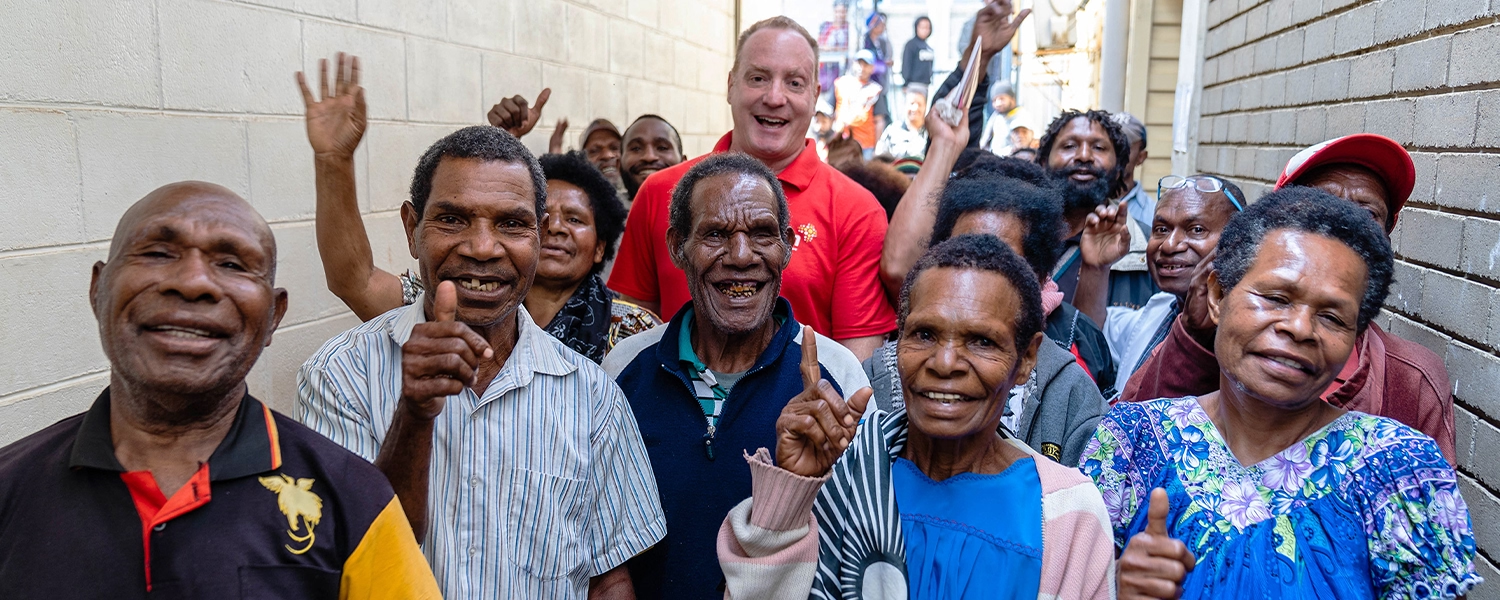
In Papua New Guinea, geography, distance, and limited services shape daily life – especially for people living in rural and remote communities. Accessing healthcare, education, rehabilitation, or disability support is not always straightforward, and for many families it can be out of reach.
For people with disabilities, these barriers are often compounded by stigma, low awareness, and a lack of inclusive services. That is why support in Papua New Guinea must be locally grounded, practical, and designed to reach communities too often left behind.
In remote and mountainous regions, these challenges can be even greater. For people with disabilities, this often means being excluded from essential services, overlooked in community life, and left without the support needed to thrive.

Today, as part of a global federation and in partnership with our Government Aotearoa New Zealand's International Development Cooperation Programme, our work focuses on inclusive eye health and community-based inclusive development.
Together with trusted local partners, we strengthen services, improve access, and support people with disabilities to live with dignity and participate fully in community life.
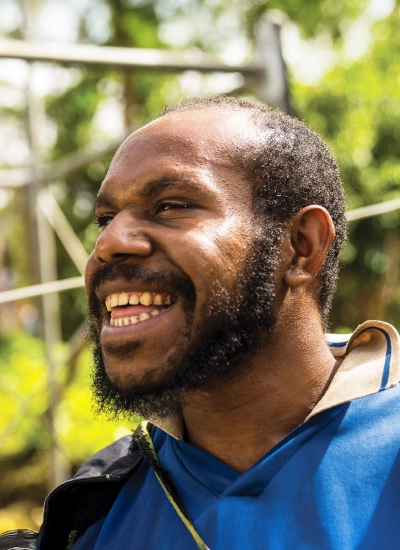
Avoidable blindness remains a significant challenge in Papua New Guinea. Limited infrastructure, a shortage of trained specialists, and low awareness mean many people go without treatment – or receive care too late.
Around 5.6% of people aged over 50 are living with visual impairment caused by untreated cataracts or blurred vision. Across the country, there are only a small number of trained ophthalmologists, and no paediatric specialists to meet the needs of children. Without access to care, people with vision loss can face isolation, exclusion, and increased risk of neglect.
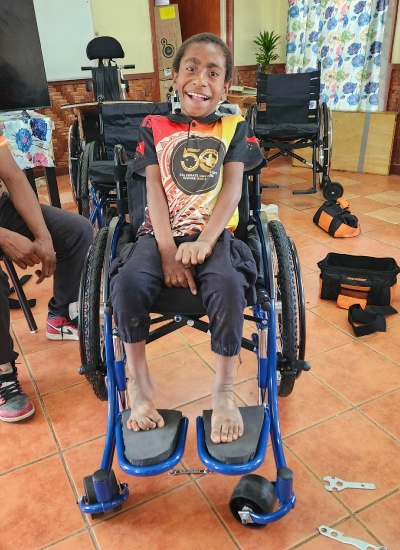
An estimated one in five people in Papua New Guinea live with a disability. Many face stigma, limited access to services, and barriers to participating fully in their communities.
Without access to rehabilitation, assistive devices, and support, people with disabilities are at greater risk of isolation, neglect, and long-term poverty.
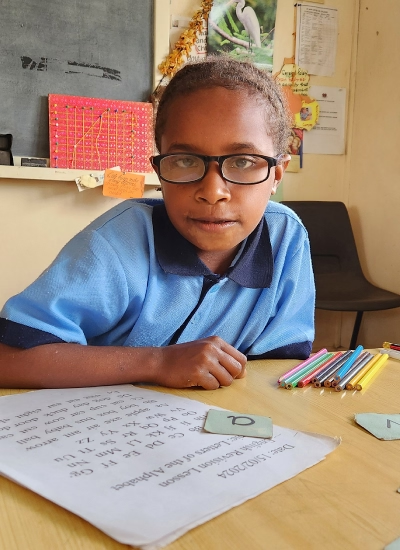
Many children with disabilities in Papua New Guinea are missing out on education. It is estimated that up to 90% of children with moderate to severe disabilities are not attending school.
Although the government has committed to inclusive education, limited resources mean many schools are not equipped to meet the needs of children with disabilities. Without education, children are at greater risk of long-term poverty and exclusion.
Patrick was losing his sight to cataracts, making it difficult to learn and achieve his dream of becoming a pastor. Through cbm's local partners, he received sight-restoring surgery that transformed his future.
Today, Patrick can see clearly again, return to school with confidence, and continue pursuing his dreams.
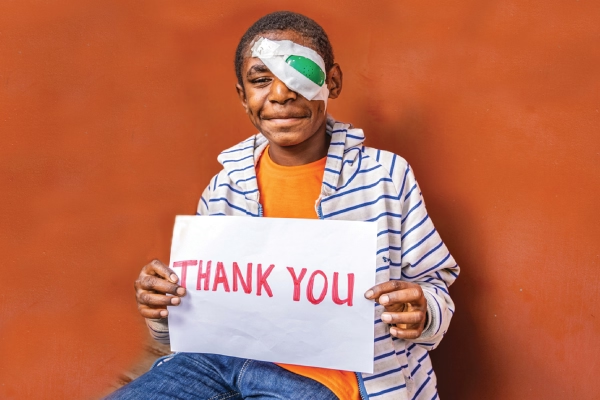
Together with local partners and communities, cbm is working to ensure people with disabilities in Papua New Guinea are not left behind, but included, supported, and able to reach their full potential.
Thank you for your kind heart.
Meet some of the people whose lives have been transformed through local partnerships, showing how inclusion, healthcare, and opportunity are creating lasting change across every region.
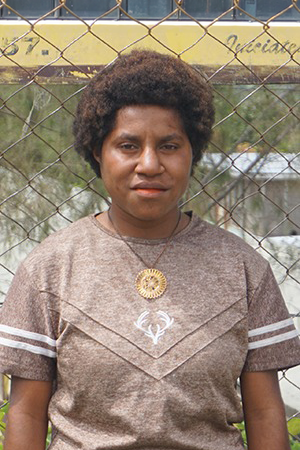
Breaking barriers through inclusive education in Papua New Guinea.
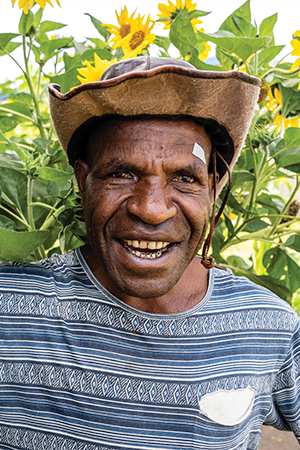
Steven lost his sight to cataracts, leaving him unable to work, support his family, or participate in daily life.
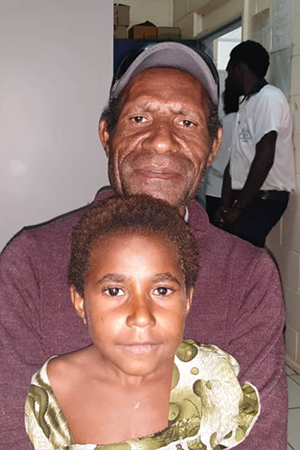
Cataract surgery helps Monica see clearly, learn at school, and build a more independent future.