Enoch
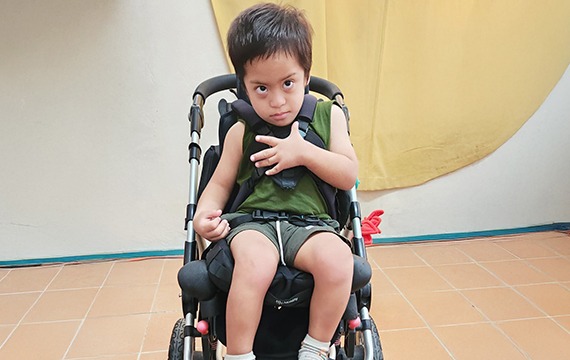
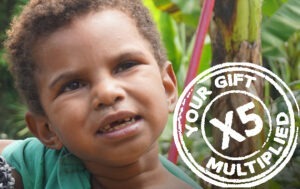
Four-year-old Enoch is a gorgeous bundle of energy, curiosity, and charm. The youngest of seven children - with one brother and five sisters - he is deeply loved and doted on by his family in Tuvalu.
Enoch was born with Down syndrome and a form of cerebral palsy that affects his movement. His mother remembers the early days clearly. “He was very floppy for his first year,” she says. Determined to give her son the best possible start, the family travelled to Fiji when Enoch was one, where he received therapy through the Frank Hilton Organisation. Over several months, they began to see encouraging gains.
Enoch’s mum, who works as Senior Education Officer for Early Childhood Education (ECE) preschools on Funafuti, says her son has profoundly shaped her professional journey.
“Because of Enoch, I can now advocate in schools,” she explains. “There are many children with disabilities at home who are not attending school. We’ve included a new approach in our education policy - currently in draft - where education assistants will visit these children at home to support their learning.”
At home, Enoch is surrounded by care. Extended family members help look after him once he returns from preschool. Until recently, however, mobility was a growing challenge. Enoch needed to be carried everywhere, and as he grows older and heavier, this has become increasingly difficult. A standard pram wasn’t an option it was uncomfortable, and Enoch refused to sit in it.
That changed when Enoch received a specialised wheelchair buggy designed to support his needs.
“He looks comfortable,” his mum says with a smile. “He looks like he has energy in it. I feel so happy that he finally has something that suits him.”
The wheelchair buggy is already opening new doors. Enoch’s mum plans to ask the preschool to install a ramp so he can be wheeled safely into class, giving him greater independence and inclusion in his learning environment.
For Enoch and his family, this is more than just a piece of equipment. It’s freedom, comfort, and a step toward a future where every child - regardless of ability - has the opportunity to learn, belong, and thrive.