Help mothers like Arziki find hope and healing beyond the smell, shame and isolation of obstetric fistula.
“…to bestow on them a crown of beauty instead of ashes, the oil of joy instead of mourning, and a garment of praise instead of a spirit of despair.” – Isaiah 61:3
Mother’s Day is a time of gratitude – a moment to celebrate the tenderness, courage, and quiet strength of mothers. Yet for many women around the world, motherhood is not only marked by joy, but also by profound loss, trauma, and physical suffering.
Today, you can help bring hope and healing to mothers like Arziki from rural Nigeria through your compassionate support.
Start by selecting your gift amount, or enter a custom amount.
In rural Nigeria, Arziki endured days of obstructed labour that tragically claimed her baby’s life and left her with an obstetric fistula. With the support of her community and access to free, cbm-funded surgery, she found healing, hope, and a chance to live with dignity again.
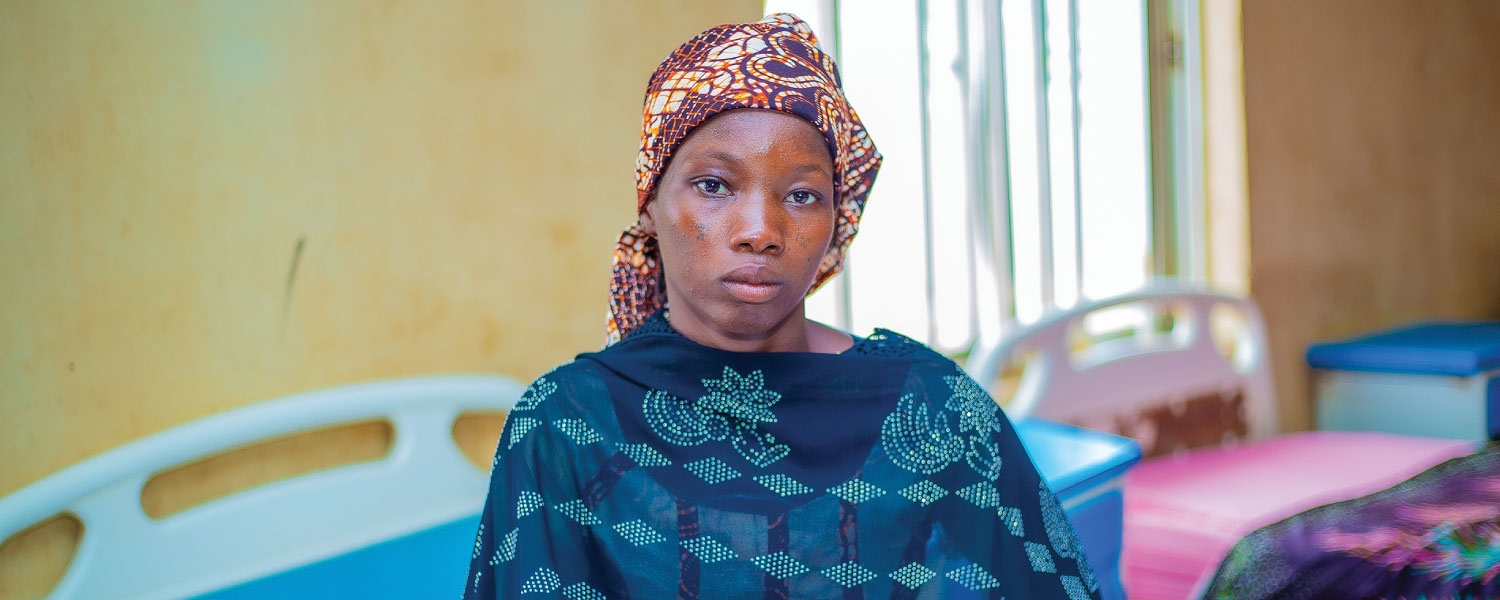
For four long days she struggled through obstructed labour. Eventually she was rushed to hospital where doctors performed an emergency caesarean section.
Tragically, her baby did not survive.
Further heartbreak then followed. While recovering in hospital, Arziki noticed her bed was constantly wet.
“After the operation, while lying in my hospital bed, I noticed the bedsheet was wet and was told it was a fistula,” she recalled.
During the prolonged labour, the baby’s head had pressed against the wall of her birth canal, cutting off blood flow. A small piece of tissue died, leaving a hole between her bladder and birth canal – an obstetric fistula.
This meant constant, uncontrollable leaking of urine. Grief upon grief became her reality.
Today, for mothers exhausted and devastated from obstetric fistula, please give generously to help restore their hope and dignity.
Obstetric fistula is a devastating childbirth injury, often caused by prolonged labour without access to urgent medical care. It can leave mothers unable to control the constant leaking of urine or faeces – a deeply distressing and isolating condition.
Without treatment, the damage can lead to chronic infections, infertility, and profound emotional trauma.
Many mothers living with obstetric fistula are rejected by their communities – even by their own families – because of the stigma and shame surrounding their condition.
Imagine trying to care for yourself – let alone grieve a lost baby – while constantly leaking urine and fearing humiliation wherever you go.
In New Zealand, the loss of a baby is mercifully rare compared with many of the world’s poorest places. Access to skilled maternity care protects most mothers. But in parts of Africa – including rural Nigeria – childbirth can still be life-threatening for both mothers and their babies.
In rural Nigeria, Arziki endured days of obstructed labour that tragically claimed her baby’s life and left her with an obstetric fistula. With the support of her community and access to free, cbm-funded surgery, she found healing, hope, and a chance to live with dignity again.
Despite her pain, Arziki remained remarkably resilient. She prayed for healing and leaned on her faith. Encouragingly, her husband and community stood beside her rather than rejecting her.
“He accepted it with good faith and did not reject me… I did not face any discrimination from my community; they accepted me.”
This support helped sustain her emotionally, but it could not cure her physical condition.
She continued living with discomfort, uncertainty, and grief.
Then hope arrived through an unexpected source – another mother in her neighbourhood who had experienced obstetric fistula and received successful treatment.
“A lady in the neighbourhood who was operated for fistula and has since recovered suggested that I should visit this hospital.”
The cbm-funded hospital offered specialised obstetric fistula surgery free of charge to mothers. Experienced surgeons carefully assessed Arziki’s condition. Obstetric fistula repair requires advanced training, skilled surgical teams, and compassionate aftercare – resources often unavailable in poorer regions.
Arziki approached surgery with faith and courage.
“I wasn’t afraid. I was happy knowing that I will be cured from this problem.”
The operation was successful.
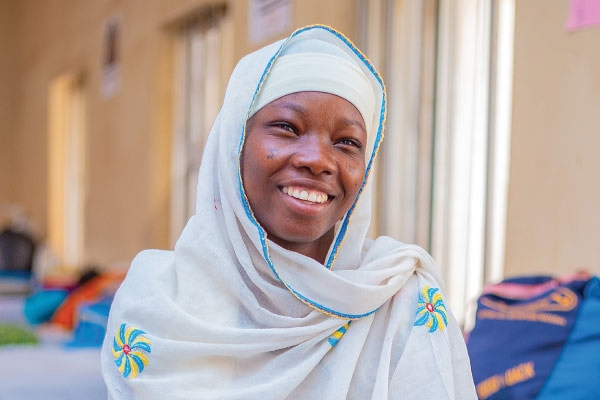
Soon after, Arziki noticed something extraordinary: the leaking had stopped.
“From all indications I am now healed… I’m very excited, I’m happy. I no longer suffer from the fistula problem.”
With healing came restored dignity, confidence, and the freedom to live freely again.
“I’m now happy I can carry out my daily activities without restriction.”
Her gratitude is heartfelt – especially toward generous supporters like you who make these surgeries possible.
“I will pray to God to bless them and record more success. Thank you.”
Arziki’s story is hopeful – but many other mothers are still waiting. Some remain hidden in shame, unaware treatment even exists. Others know help is possible but cannot afford travel, surgery, or recovery care.
Your kindness helps change that.
Today, will you please prayerfully consider giving hope and healing to mothers like Arziki? Your gift will help find mothers hidden in shame and isolation living with obstetric fistula, and help support life-changing obstetric fistula surgery, aftercare medication and livelihood programmes to help mothers live independently. It will also help train healthcare staff around the prevention of obstetric fistula.
Chances are, if Arziki had given birth here in New Zealand, her child might be cuddled in her arms today – and she certainly would not have endured years of debilitating injury.
But thanks to supporters like you, she now has her health, dignity, and future restored.
Imagine the joy you can help bring to other mothers still waiting for that miracle.
Your gift today can help: