Help bring life-changing treatment to Rohingya refugees in the overcrowded refugee camps of Cox’s Bazar.
“He gives strength to the weary and increases the power of the weak.” – Isaiah 40:29
Your great love for people with disabilities is having remarkable results in challenging places around the world. Your gift today in support of the Rohingya refugees will be multiplied x4.
Start by selecting your gift amount, or enter a custom amount.
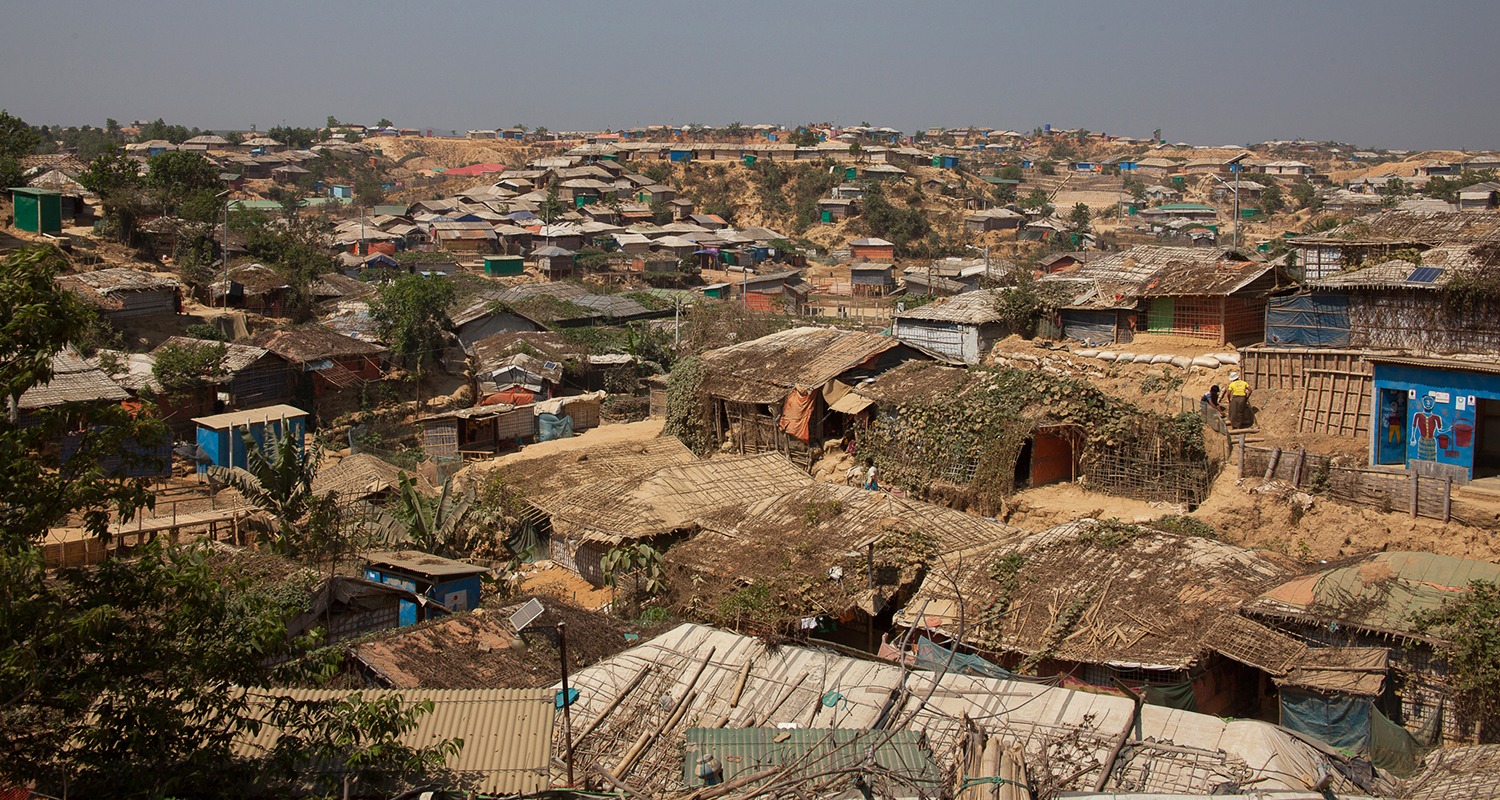
These crowded sand dunes covered in blocks of makeshift shelters have been home to Harisa since almost a million Rohingya refugees fled from Myanmar.
Hosnima’s parents carried their little girl all the way to safety on a sling made from bamboo poles.
Every day in the refugee camps of Cox’s Bazar, parents are carrying burdens almost too heavy to bear. Our CEO, Murray Sheard, has seen this with his own eyes. They carry the trauma of fleeing violence. They carry the daily struggle for food and shelter. And some parents are carrying a child whose body is slowly losing strength.
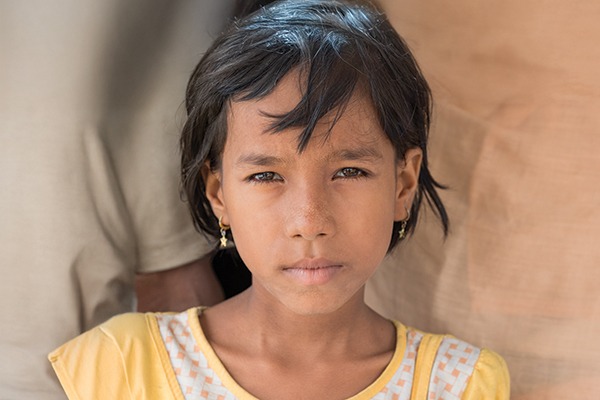
Eight-year-old Hosnima is one of those children.
When she was four years old, Hosnima took a terrible fall down a flight of stairs in her village in Rakhine State, Myanmar. She struck her head badly.
Her parents, Tojim and Fatima, rushed her to the local hospital, where doctors took x-rays and prescribed pain medication. But that small rural hospital had no specialists. No rehabilitation services. No way to properly diagnose the damage done to her spine.
What doctors suspected was a spinal cord injury slowly became heartbreakingly clear.
Day by day, Hosnima grew weaker. Her core muscles lost strength. Her balance deteriorated. Simple movements became harder and harder. Her parents watched helplessly as their little girl struggled to stand.
Then the rumours of violence began spreading. Rohingya villages were being attacked. Homes were burned. Families were fleeing for their lives.
Hosnima’s parents faced an impossible decision. Stay – and risk everything? Or flee through jungle terrain and across rivers, past hidden landmines and armed soldiers – with a child who could barely walk?
They fled.
“We carried Hosnima here on a sling made from bamboo poles,” her father explains.
Along with more than 800,000 Rohingya refugees, the family eventually crossed into neighbouring Bangladesh. Exhausted and traumatised, they arrived in the vast refugee settlements sprawling across the sand dunes of Cox’s Bazar. At first, survival was the only priority.
The family built a fragile shelter from bamboo poles and plastic sheeting. They queued for food rations. They endured suffocating heat, monsoon rains and dangerous overcrowding. And Hosnima continued to grow weaker.
Then one day, something extraordinary happened. Hope came walking down the narrow pathway outside their shelter.
A physiotherapist from cbm-partner Centre for Disability in Development (CDD), was going door-to-door searching for people with disabilities who could not reach the Medical Centre.
“We found her at home,” recalls physiotherapist Prosenjit.
Hosnima was feverish and unwell when they first met her. She needed immediate medical attention.
But that visit began something life-changing.
Through cbm’s Home Based Care initiative, physiotherapists now travel from shelter to shelter across the refugee camps – bringing rehabilitation directly to children like Hosnima.
Because the truth is simple: many families cannot reach the clinic.
The pathways between shelters are steep and uneven. During the monsoon they become deep mud. Steps are dangerous for children with weak muscles and poor balance.
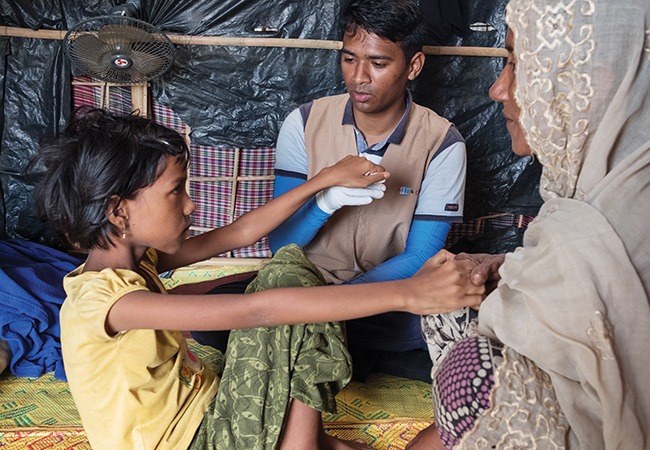
So instead of asking vulnerable families to come to the Medical Centre, this remarkable team brings the care to them. Regular physiotherapy is now helping rebuild Hosnima’s strength.
This is wonderful, life-changing work, worthy of prayers and support.
Prosenjit patiently works to strengthen Hosnima’s core muscles and improve her balance. Just as importantly, he carefully teaches her mother Fatima how to continue the exercises every day.
This means Hosnima receives therapy not just during visits – but every single day at home.
It has only been a few months. But already there are signs of hope. Hosnima has started venturing outside. She carefully manoeuvres the uneven steps at the entrance to her shelter. She has even begun attending a local child-friendly space where children can play, learn and regain confidence.
For a little girl who could barely move, these small steps feel enormous. Her parents still walk beside her, worried she might fall. But they are beginning to hope again.
cbm’s humanitarian coordinator in Cox’s Bazar says the Home Based Care service has become one of the most important parts of the Rohingya refugee response.
“The pathways between homes and the clinic are not accessible,” she explains. “So having teams that go from house to house is incredibly important. We are meeting people where they need the help.”
The physiotherapy teams serve the enormous refugee settlements. Each team visits up to five patients a day, criss-crossing the camps in sweltering heat and pouring monsoon rain.
“It’s very exhausting for them,” cbm’s humanitarian coordinator says. “What they do is remarkable.”
But as more children and adults with disabilities are identified, the demand keeps growing.
“I wish we had more teams.”
That is why we need your help. We can find more teams - if we had more funds. Please help bring healing home to children like Hosnima.
As hard as it is to be a refugee, it is even harder to be a refugee with a disability.
Without specialised care, children like Hosnima can lose not only strength – but confidence, opportunity and hope.
But with you beside them, they can regain movement. They can regain courage. They can move outside into the light again – with hope.
Thank you for carrying the burdens of families like Hosnima’s.
Your compassion is not abstract. It travels down narrow muddy pathways. It climbs bamboo steps. It kneels on woven floors. It strengthens fragile muscles. It does what Jesus did.
Hosnima’s progress is still fragile. More children and adults with disabilities are being identified every week in the camps of Cox’s Bazar. Please prayerfully consider gifting today.
Through our Government’s Aotearoa New Zealand International Development Cooperation Programme, your gift will have 4x the impact to create a life-changing oasis for Rohingya refugees in Cox's Bazar!

Your gift will help support disability therapy, including physiotherapy, occupational therapy, speech language therapy, and hearing and vision services for children like Hosnima – and adults too.
It will help provide assistive technologies, including mobility devices, hearing aids and glasses.
And it will support the staff – like Hosnima’s physiotherapist from the camps’ Medical Centre, bringing help and healing to the minds and bodies of Rohingya refugees.
Thank you for your kindness!